
As the crisp fall air rolls in and our calendars fill with seasonal gatherings, autumn brings plenty of fun for families—and a unique set of hazards for our four-legged family members.
While we look forward to spooky costumes, glowing jack-o’-lanterns, and feast-filled tables, the shift in routine, influx of visitors, and abundance of human foods can quickly turn a festive week into an emergency vet visit. Here is your essential guide to keeping your pets safe, calm, and healthy through Halloween and Thanksgiving.
🎃 Spook-Free Halloween: Trick-or-Treat Safety
Halloween is packed with excitement, but the constant doorbells, costumes, and bowls of candy pose significant risks to pets.
1. Hide the Candy Stash
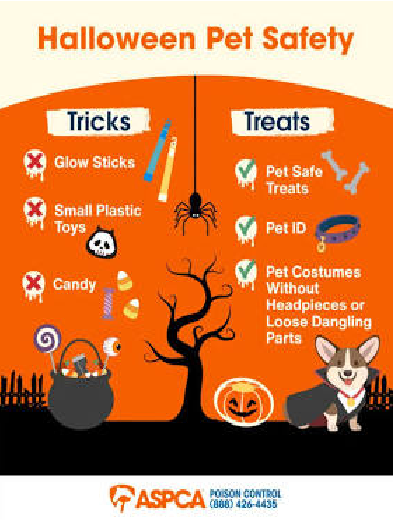
- Chocolate Hazards: Dark chocolate and baking chocolate contain high levels of theobromine and caffeine, which can cause severe cardiac and neurological issues.
- Xylitol / Birch Sugar: Frequently found in sugar-free candies and gums, this artificial sweetener triggers a rapid, dangerous drop in blood sugar (hypoglycemia) and potential liver failure in dogs.
- Raisins & Wrappers: Chocolate-covered raisins carry double the threat, as grapes/raisins can cause acute kidney failure. Plastic and foil wrappers can also cause intestinal blockages if swallowed.
2. Costume Comfort First
If you dress up your pet, prioritize safety over style. Ensure the costume does not restrict breathing, vision, or movement, and check for small buttons, ties, or dangling pieces that could be chewed off and swallowed.
3. Secure the Front Door
With trick-or-treaters arriving throughout the evening, doors open frequently. Keep nervous pets in a quiet, secure interior room with soft music or a white noise machine to prevent them from darting outside. Always double-check that microchip information and collar tags are up to date!
🦃 Thanksgiving Feasts: Protecting Your Pet’s Pancreas
Thanksgiving centers around sharing food with loved ones, but sharing high-fat holiday meals with dogs and cats is one of the leading causes of November veterinary emergency room visits.
The Major Danger: Acute Pancreatitis
The most critical health risk during Thanksgiving is dietary indiscretion leading to pancreatitis—an acute, painful inflammation of the pancreas.
What Causes It?
The pancreas releases digestive enzymes. When a pet ingests high-fat foods (like turkey skin, gravy, buttered potatoes, or bacon), the pancreas becomes overworked and inflamed. Enzymes can begin digesting the tissue of the organ itself.
Symptoms to Watch For
- Repeated vomiting and severe diarrhea
- Abdominal pain (hunched back, restlessness, or whining when touched)
- Lethargy and loss of appetite
- Fever and dehydration
Prevention
Strictly instruct guests not to feed scraps under the table. Even a small portion of turkey skin or buttery stuffing can trigger a severe flare-up requiring hospitalization, IV fluids, and pain management.
Other Thanksgiving Hazards
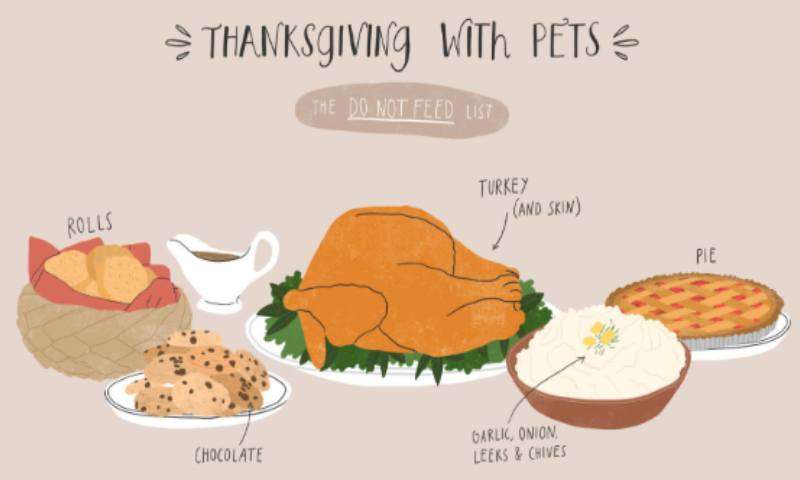
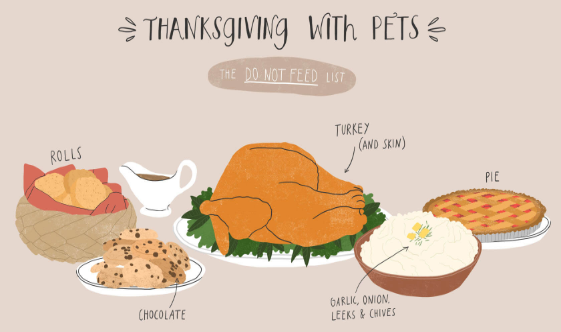
- Cooked Bones: Poultry bones splinter easily, posing choking hazards and risks of gastrointestinal perforation.
- Alliums (Onions, Garlic, Leeks): Common in dressings and marinades, alliums contain compounds that damage red blood cells, leading to anemia.
- Yeast Dough: Unbaked bread dough ferments in a pet’s warm stomach, producing toxic alcohol levels and expanding dangerously to cause gastric bloating.
Quick Fall Safety Checklist
| Holiday | Top Threat | Key Prevention Step |
|---|---|---|
| Halloween | Chocolate, Xylitol, Escapes | Keep candy far out of reach; crate or isolate pets during trick-or-treating hours. |
| Thanksgiving | Fat-induced Pancreatitis, Splintered Bones | Keep all rich foods off limits; secure garbage cans with locking lids. |
Keeping your companions safe during the fall holidays comes down to maintaining boundaries around human food, creating quiet retreat spaces, and staying vigilant against hidden toxins. A little preparation ensures the season remains joyful for every member of your home!