As prey animals, livestock and horses are natural masters at hiding discomfort. In the wild, showing weakness makes an animal a prime target, so large animals have evolved to mask pain until an illness or injury becomes severe.
Recognizing subtle signs of discomfort early is essential to maintaining performance, productivity, and welfare—especially during winter when freezing temperatures, mud, and frozen ground compound underlying joint and metabolic conditions.

1. Species-Specific Indicators of Discomfort
While general behavioral shifts like social isolation, altered posture, or leaving feed behind apply across the board, each large animal species demonstrates pain through distinct behavioral and physical cues.
Subtle changes in routine—such as lagging behind during herd movement or spending extra time lying down—are often the first signs of discomfort in prey species.
| Species | Primary Behavioral & Physical Clues |
|---|---|
| Horses | Weight shifting between limbs, flehmen response (lip curling), flank watching, restlessness, altered head carriage, and reluctance to move. |
| Cattle | Grunting during movement or rising, arched backline (roached posture), grinding teeth (bruxism), extended neck, and kicking at the belly. |
| Goats & Sheep | Lagging behind the herd, reluctance to rise, vocalizing (vocalizations increase in goats; sheep tend to go silent), hunching, and teeth grinding. |
| Pigs | Hiding deep in bedding, high-pitched squealing when touched or moving, dog-sitting posture, reluctance to move, and shivering or muscle tremors. |
2. Winter Weather Worry Points for Painful Livestock
Cold weather, ice, and mud create significant hurdles for animals dealing with chronic pain, laminitis, foot rot, or arthritis.
| Winter Risk | Impact on Pain & Discomfort | Prevention & Management |
|---|---|---|
| Frozen / Uneven Ground | Hard, rutted mud creates sharp impact forces on joints and hooves, worsening arthritis, foot rot, or laminitis. | Maintain flat, bedded areas or gravel turnout pads to give animals relief from frozen ruts. |
| Increased Caloric Demand | Animals burn extra energy maintaining body heat in cold weather. Painful livestock often hesitate to walk to feeders, risking rapid weight loss. | Place high-quality hay and clean water close to shelters so painful or senior stock don’t have to navigate icy paths. |
| Reduced Water Consumption | Cold water leads to reduced drinking, increasing impaction colic risk in horses and urinary calculi risks in goats and sheep. | Use heated water troughs or tank heaters to keep water palatable and encourage steady hydration. |
| Dampness & Shivering | Cold rain and matted coats cause persistent muscle tension and shivering, exacerbating stiffness in arthritic animals. | Provide dry, three-sided shelters facing away from wind, packed with dry straw or shavings. |
3. Grimace Scoring: Standardized Facial Assessment Across Species
Facial expressions provide an objective, standardized metric for evaluating acute and chronic pain in large animals. Veterinary researchers have established validated grimace scales for equine, bovine, small ruminant, and swine species.
The Horse Grimace Scale (HGS)
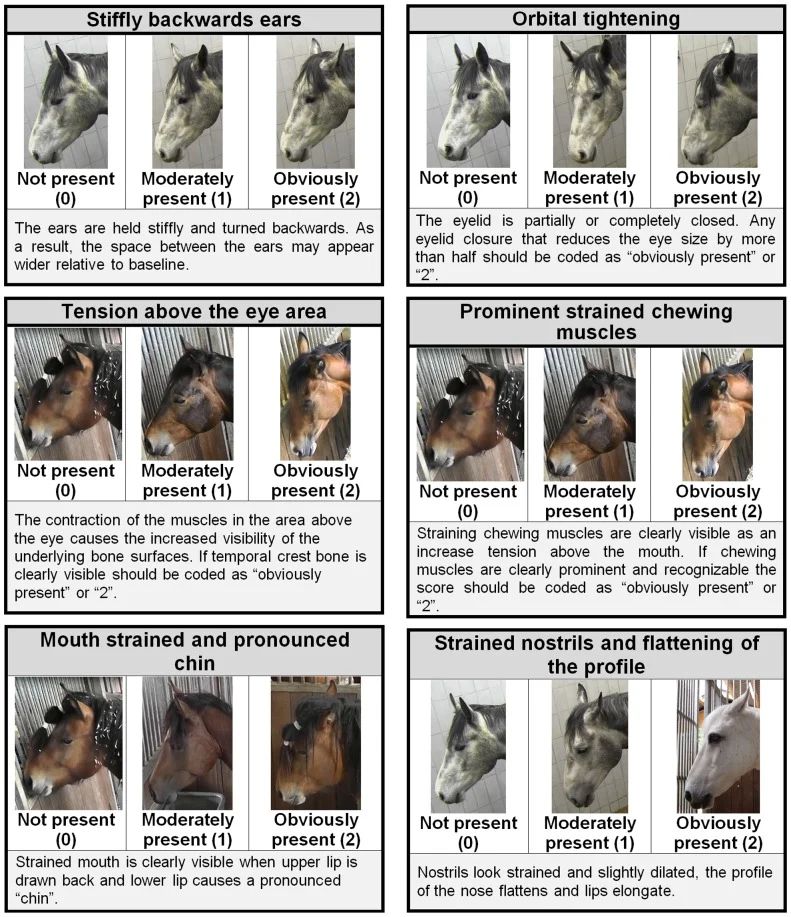
In equine assessment, six key facial action units are evaluated:
1. Stiffly Backwards Ears:
Ears held rigidly backward rather than alertly moving or casually resting.
2. Orbital Tightening:
Squeezing or partial closure of the eyelids, reducing eye aperture size.
3. Tension Above the Eye Area:
Contraction of muscles above the eye causing prominent bone definition.
4. Prominent Strained Chewing Muscles:
Increased tension in the jaw and masseter muscles visible on the cheek.
5. Strained Mouth & Pronounced Chin:
Tightening of the lips, drawing the upper lip back and creating a square or pointed chin profile.
6. Strained Nostrils & Flattened Profile:
Nostrils dilated or drawn into a square shape with flattening along the profile of the nose.
Grimace Signs in Cattle, Small Ruminants & Pigs
Similar standardized facial markers apply across other livestock species:
- Cattle (Cow Pain Scale): Evaluates backward or drooping ear positions, nasal strain, and a wide-eyed or dull “stare.”
- Goats & Sheep (Sheep Pain Facial Scale / Sheep Grimace Scale): Key markers include backward ears, narrowed eye aperture, cheek muscle tightening, and a flattened muzzle profile.
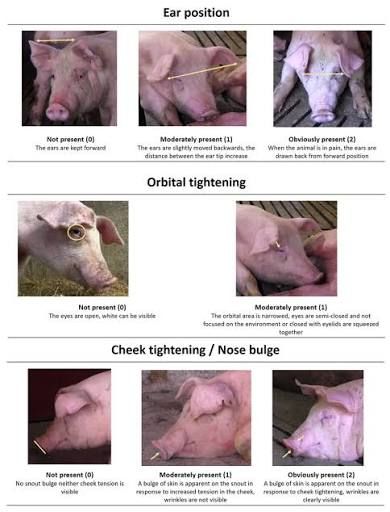
- Pigs (Piglet Grimace Scale): Assesses backward ear positioning, orbital tightening (squeezed eyelids), and cheek or snout bulges caused by facial muscle contraction.